Delete TE Version
Deleting A Turbot Guardrails Enterprise (TE) Version
In this guide, you will:
- Use AWS Service Catalog to delete an installed TE version.
- Monitor and troubleshoot the TE deletion process.
Deleting old Turbot Guardrails Enterprise (TE) versions declutters the environment, frees up resources for new deployments and reduces cloud costs.
[!IMPORTANT] The TE stack and workspace stack will need to be updated in tandem! Do not delete the old TE stack until the new, updated stack has completed in CloudFormation
Prerequisites
- Access to the Guardrails AWS account with Administrator Privileges.
- Familiarity with AWS Console, Service Catalog, and CloudFormation services.
Step 1: Access AWS Console
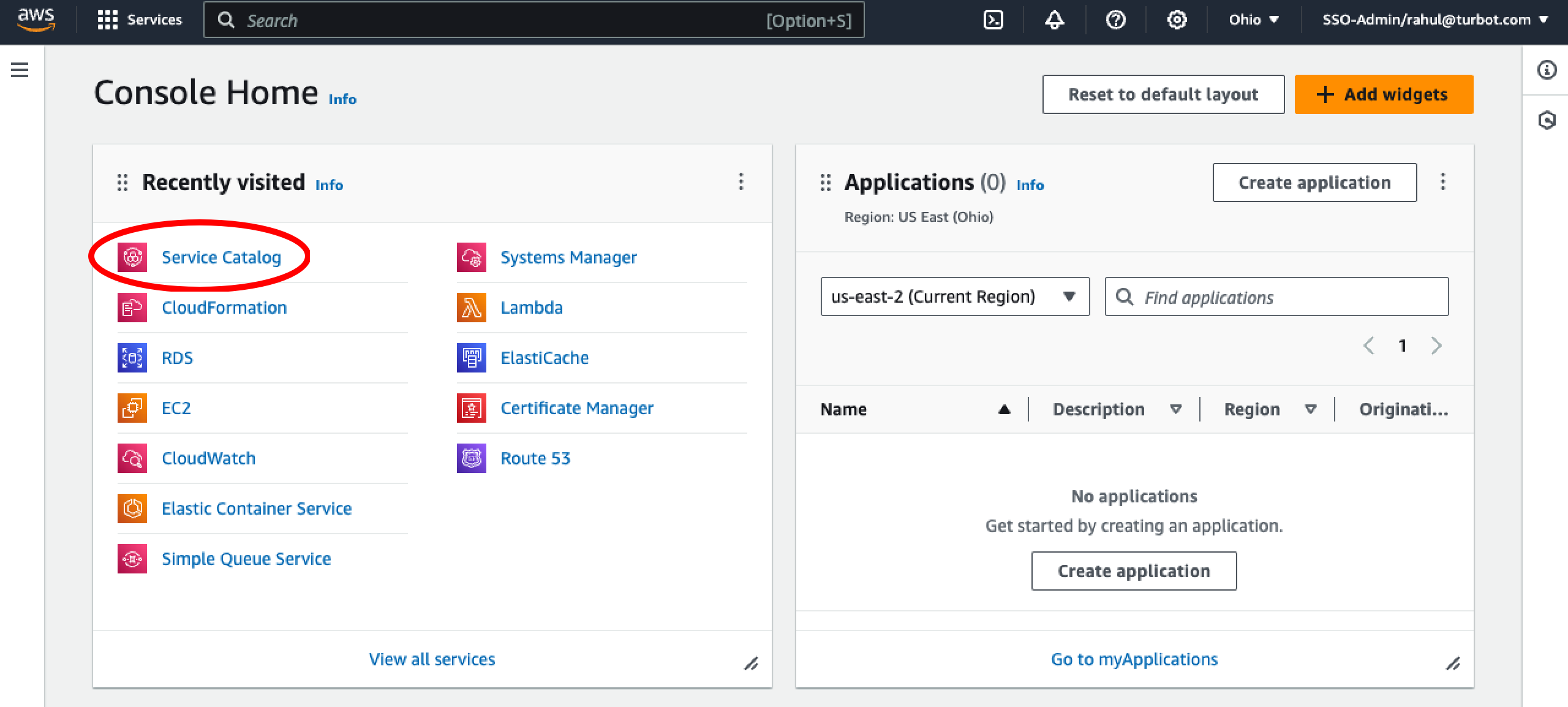
Open the AWS Console and navigate to the Service Catalog service in the region where TE is deployed.
Step 2: Navigate Provisioned Products
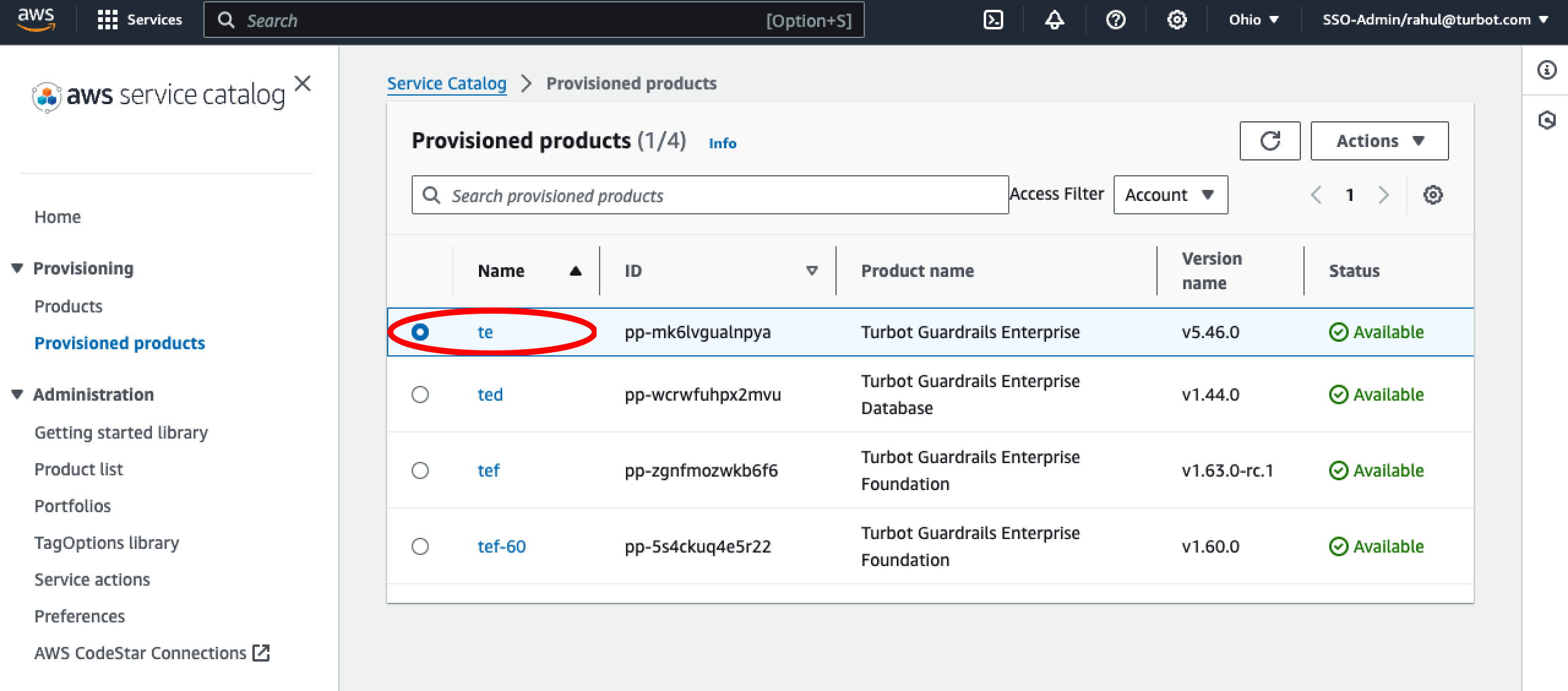
Choose Provisioned Products from the left navigation menu.

Step 3: View Provisioned Products
Change the Access Filter in AWS Service Catalog from User to Account to view all TE provisioned products across the entire account.

Step 4: Select Provisioned Product
Select the TE provisioned product from the list to be deleted.
Step 5: Delete the TE Version
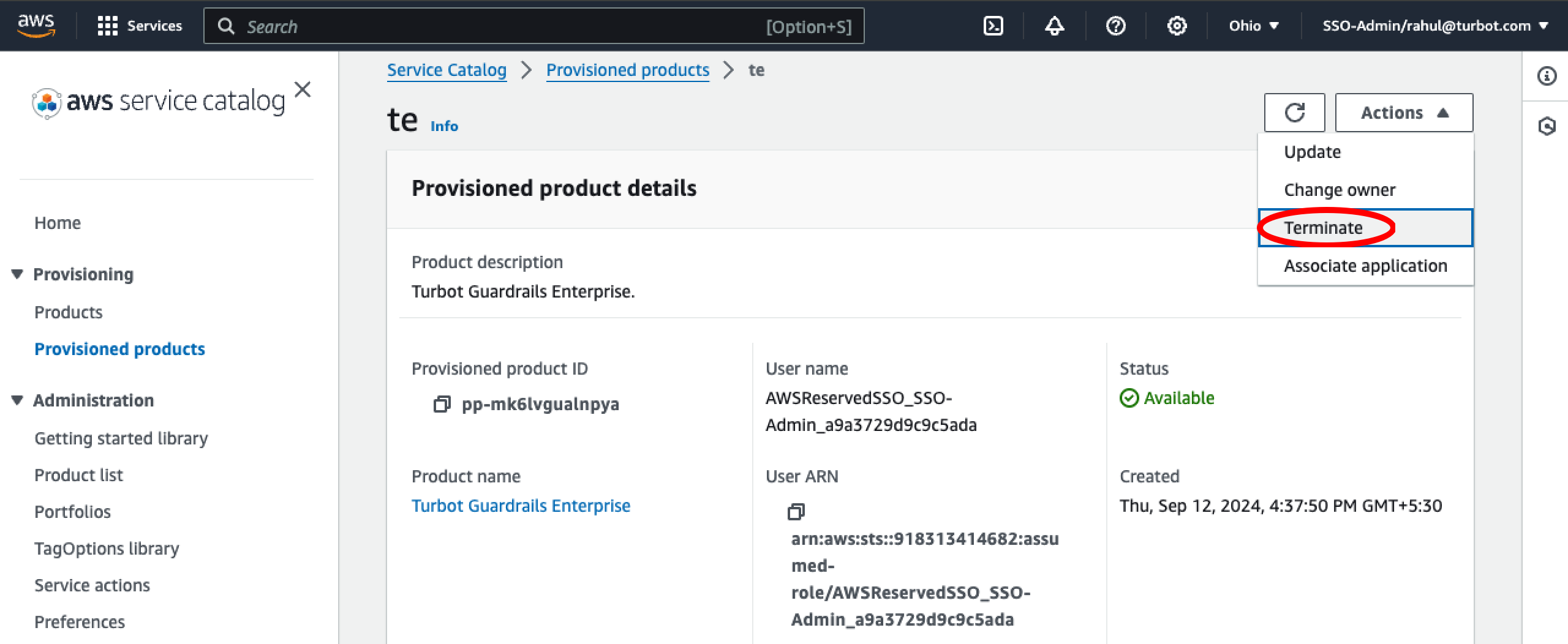
Select Actions and choose Terminate.
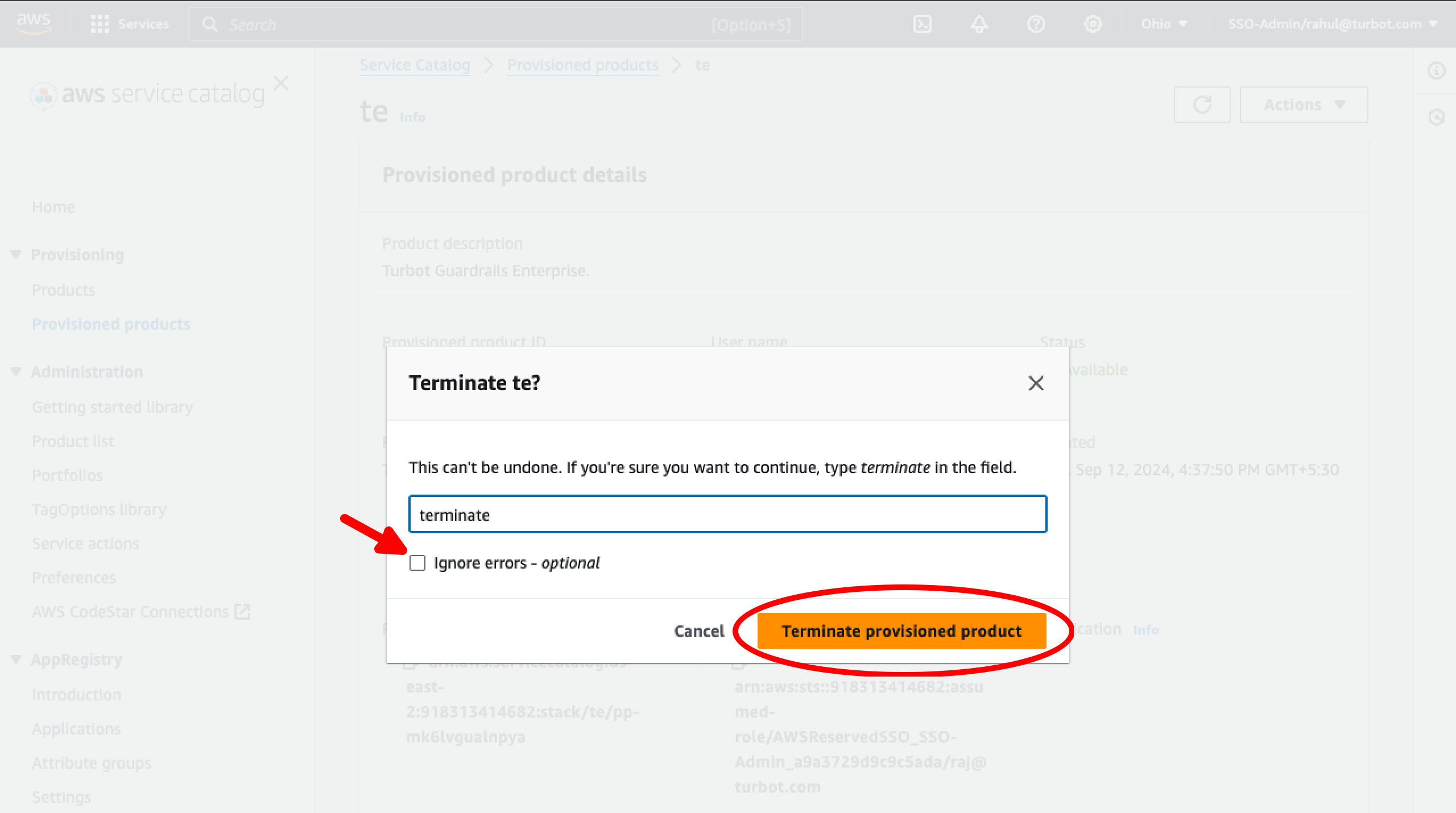
To confirm termination, type terminate in the confirmation field and ensure the Ignore errors (optional) checkbox remains unchecked.
When the dialog box shows Service Catalog is terminating TE select Close and allow the process to continue.
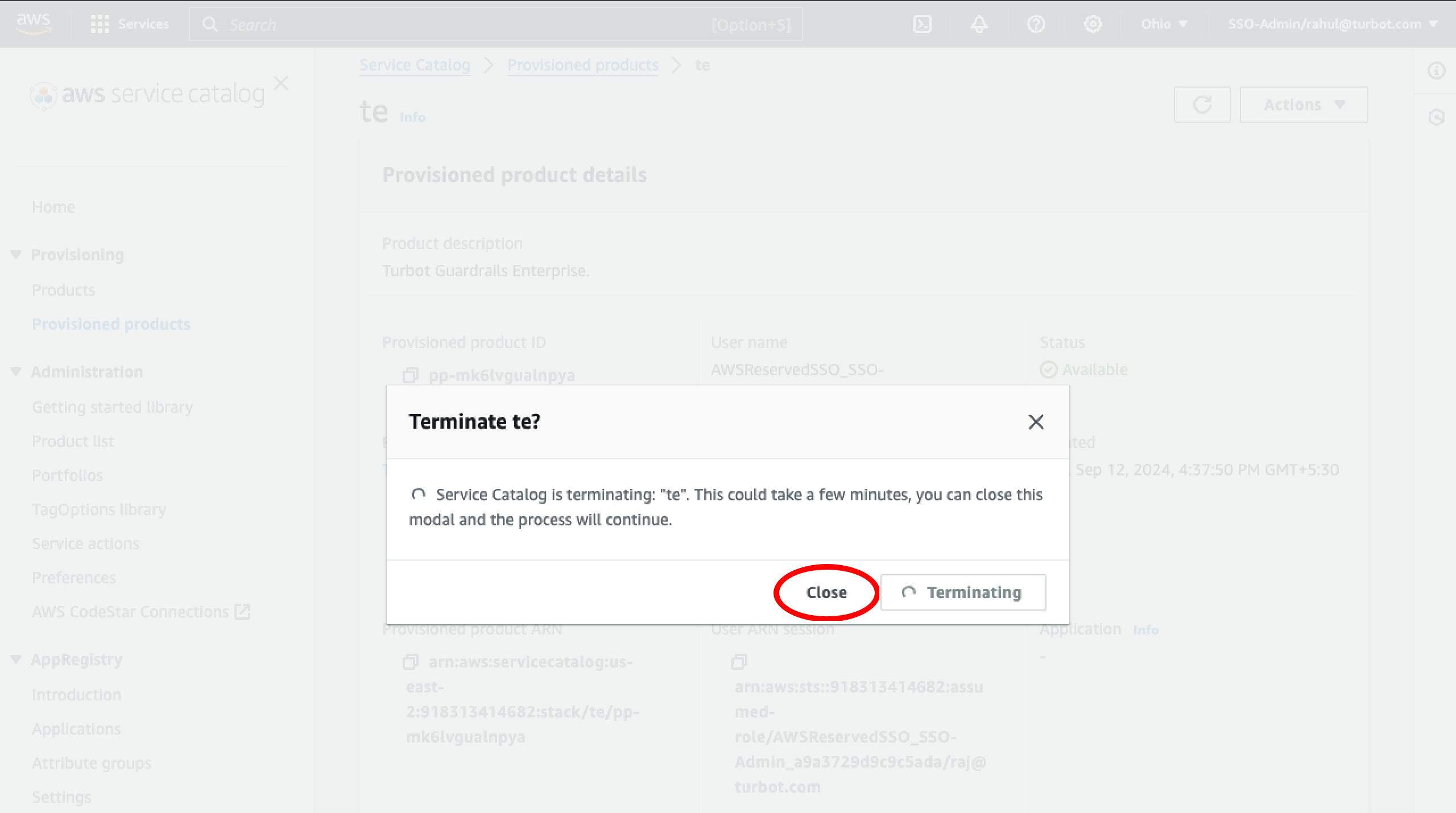
[!NOTE] Deletion can take an extended period of time (15 plus minutes).
Step 6: Monitor Deletion
You have initiated the deletion of the TE version. This triggers deletion of several nested CloudFormation stacks.
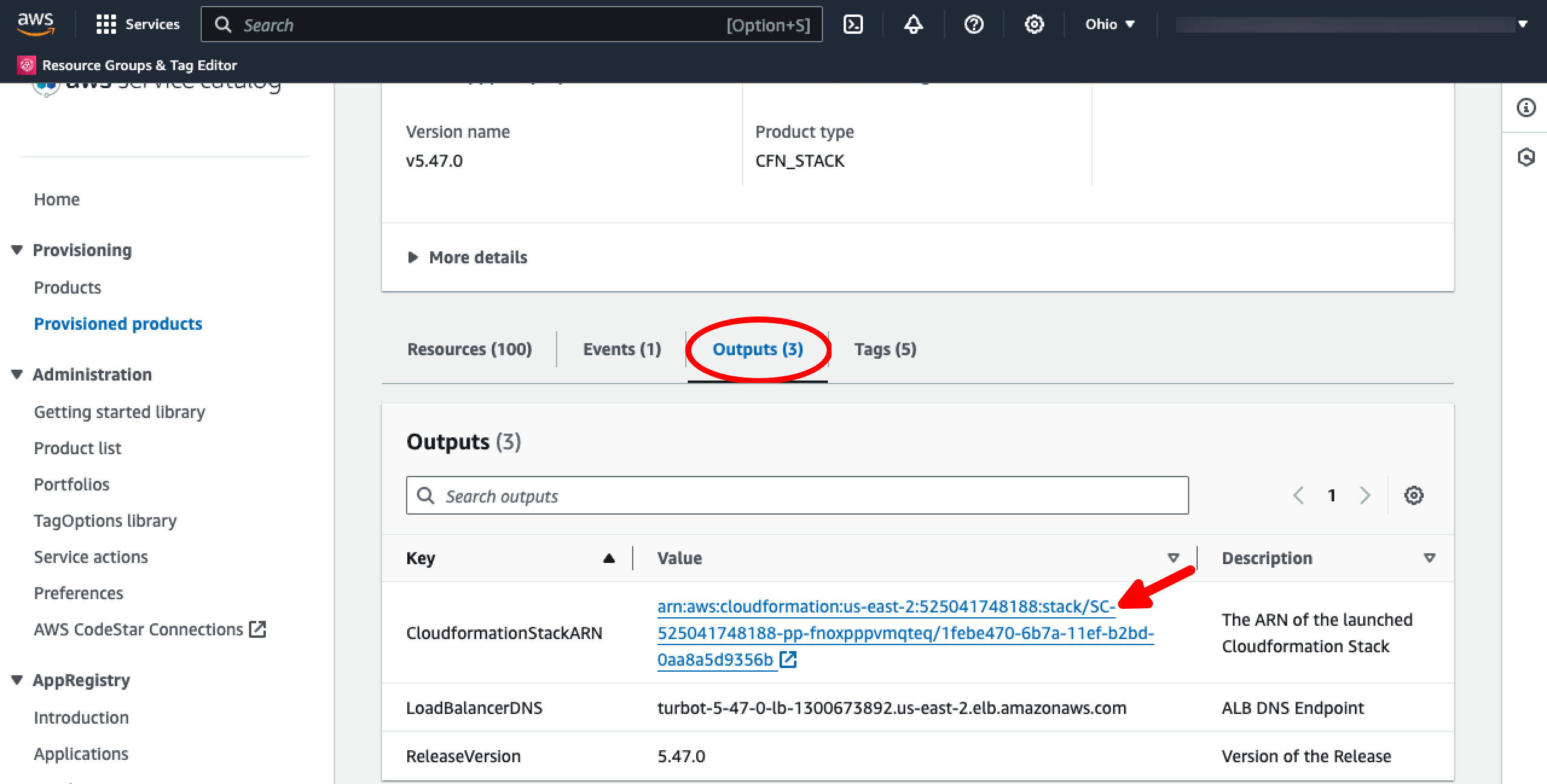
Select the TE Provisioned Product, select the Outputs tab, and use the CloudFormationStackARN Value link to navigate to the CloudFormation stack and monitor the deletion progress.
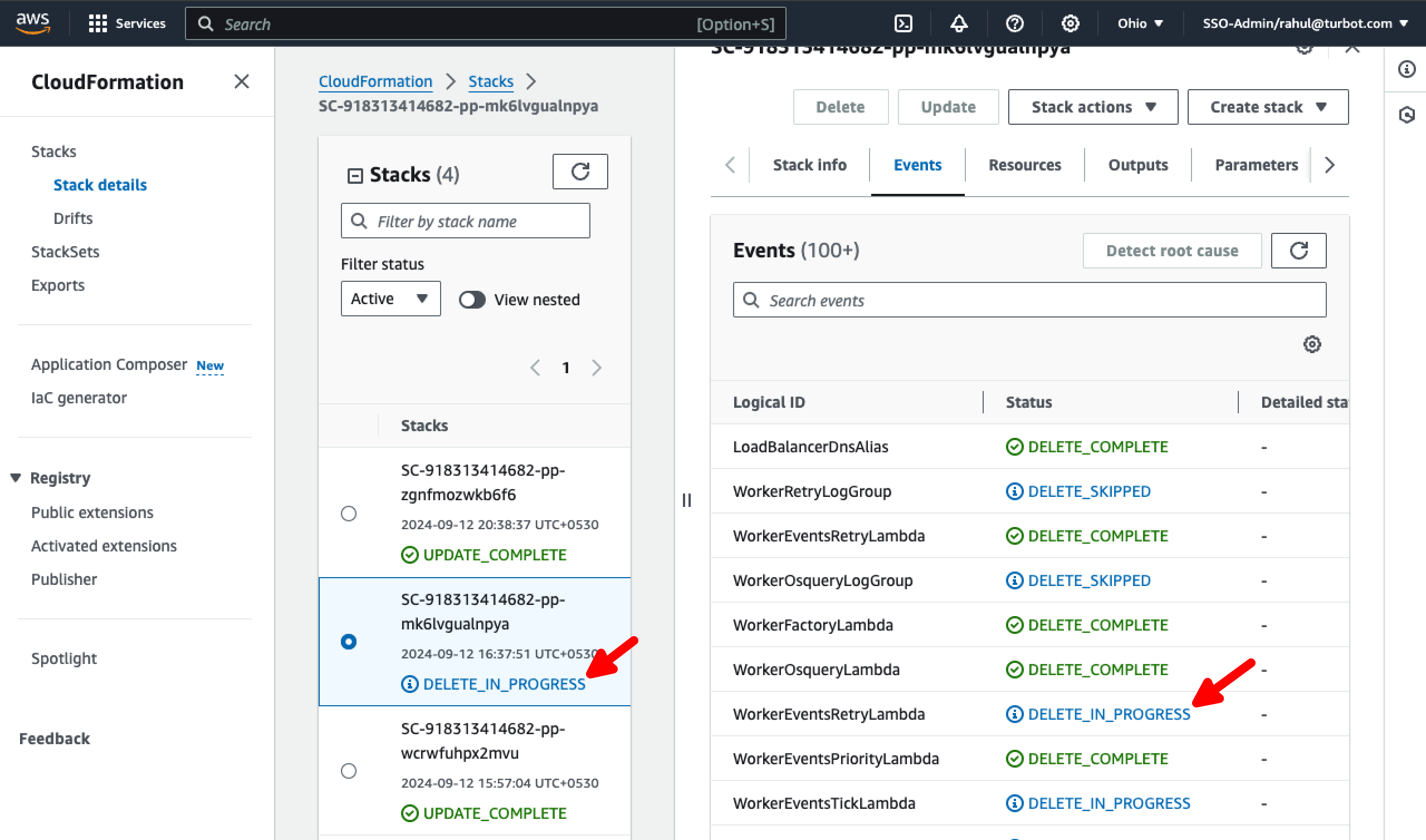
The TE CloudFormation stack status should change to DELETE_IN_PROGRESS indicating the delete process is in progress.
Step 7: Review
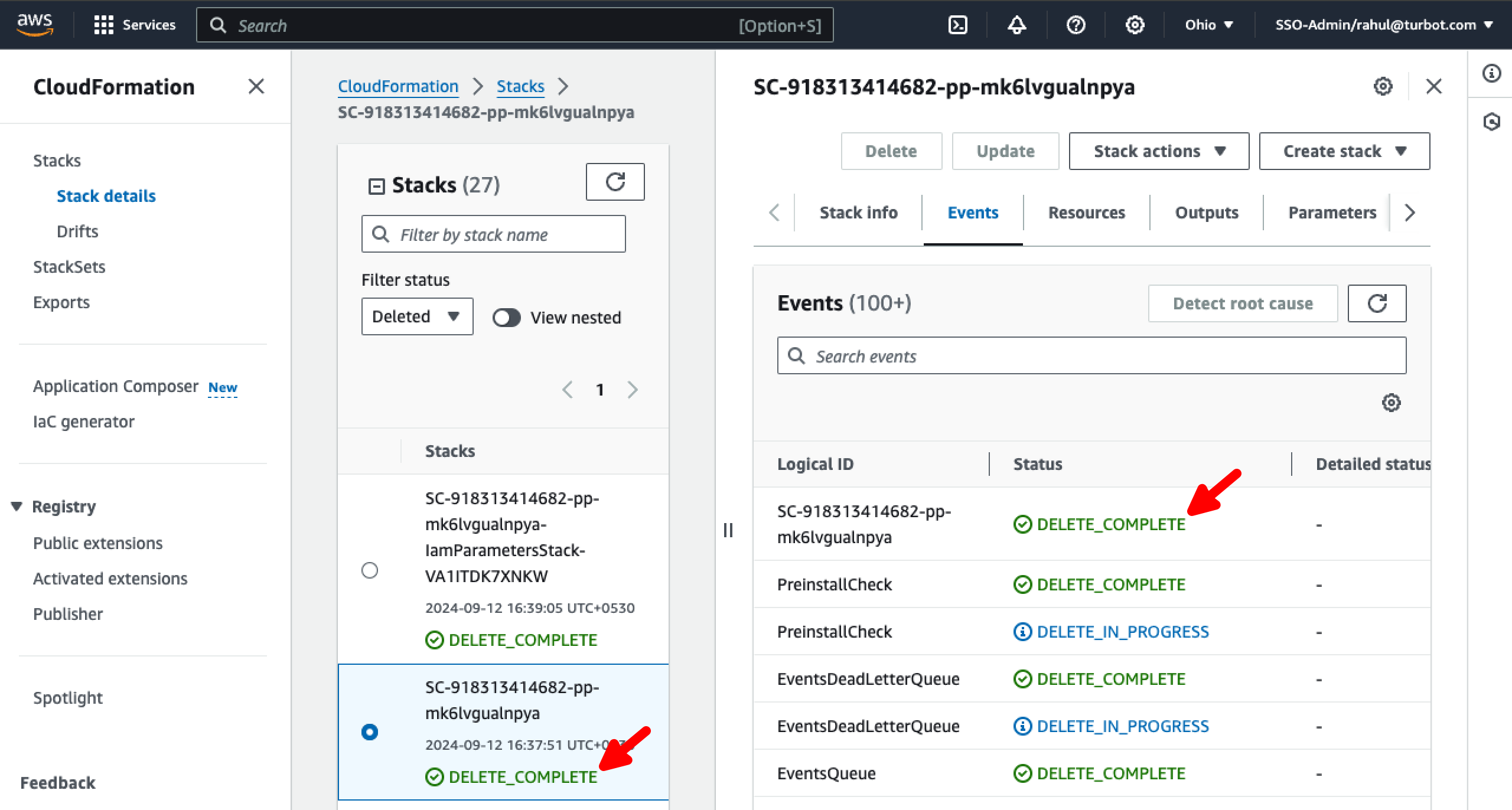
- The TE CloudFormation stack status should change to
DELETE_COMPLETEindicating the deletion completed successfully.
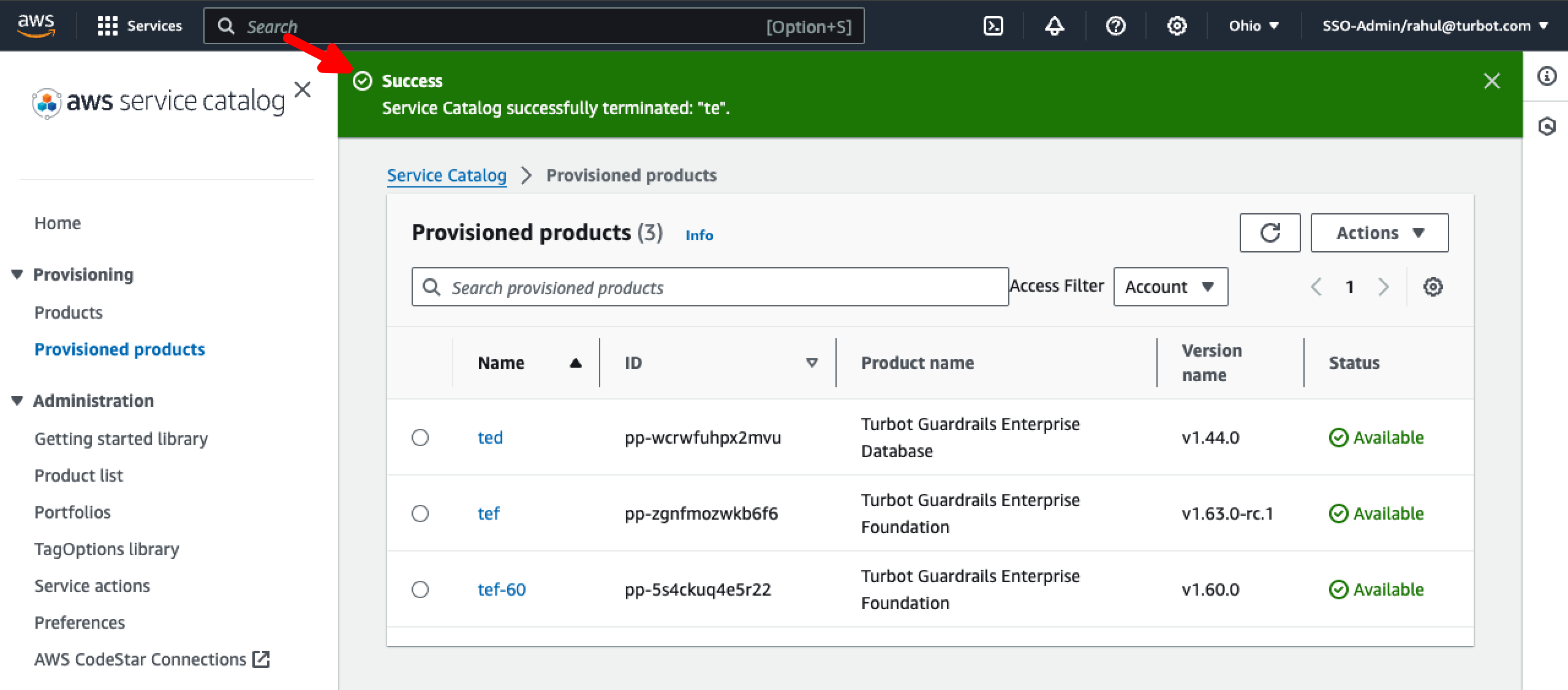
- The TE Provisioned Product should no longer appear in the list, and a Success message stating
Service Catalog successfully terminated TEis displayed.
Next Steps
Please see the following resources to learn more about Turbot Guardrails Enterprise:
- Learn more about TE architecture.
- Learn about TE Installation.
Troubleshooting
| Issue | Description | Guide |
|---|---|---|
| Permission Issues | If the current logged-in user lacks permission to modify, update, or create resources in the stack, or if IAM roles or SCPs have changed, preventing built-in roles from accessing needed configuration settings. | Troubleshoot Permission Issues |
| Further Assistance | If you continue to encounter issues, please open a ticket with us and attach the relevant information to assist you more efficiently. | Open Support Ticket |