
How They Fit Together

See your cloud
- Query configurations with SQL
- Run compliance benchmarks
- Build custom dashboards
- Ask questions in plain English
- Aggregate across 80+ providers
- Share reports with stakeholders

Secure your cloud
- Block bad configs at the API layer
- Auto-remediate drift in real time
- Enforce tagging and encryption
- Simulate controls before deploying
- Manage posture across accounts
- Roll out progressively
Pipes identifies what needs attention. Guardrails takes action. Pipes proves it worked. This is the loop that brings compliance findings to zero.
Real Workflows
Here's how teams actually use Pipes and Guardrails together, step by step.
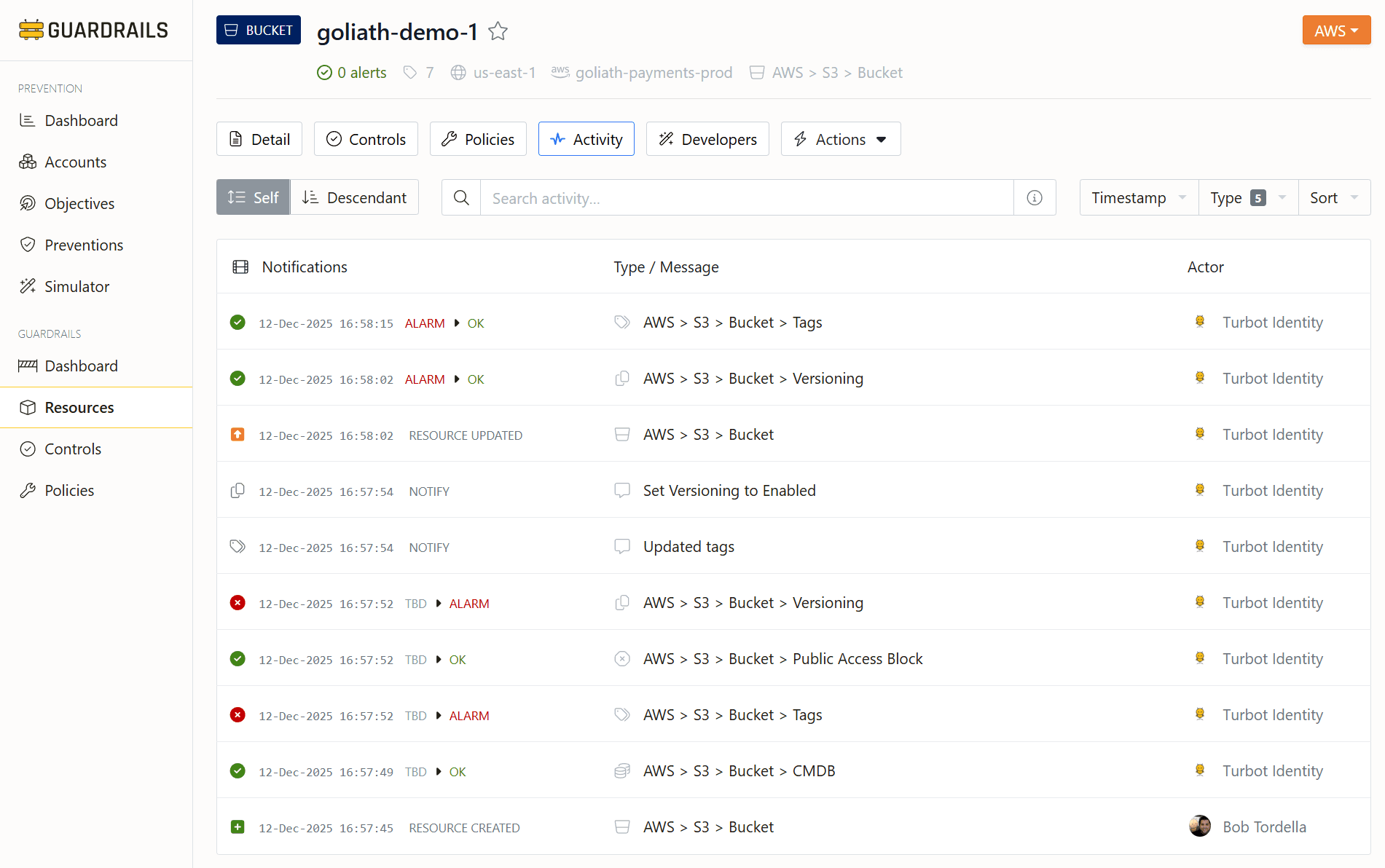
“S3 buckets keep getting created without encryption”
Run the CIS benchmark or write a quick SQL query. Pipes shows you 847 unencrypted buckets across 12 accounts.
Enable the S3 encryption control in Guardrails. New buckets get encrypted automatically. Existing ones get corrected in real time.
Run the same query next week. 847 becomes 312, then 41, then 0. Schedule it as a recurring report to track the trend.
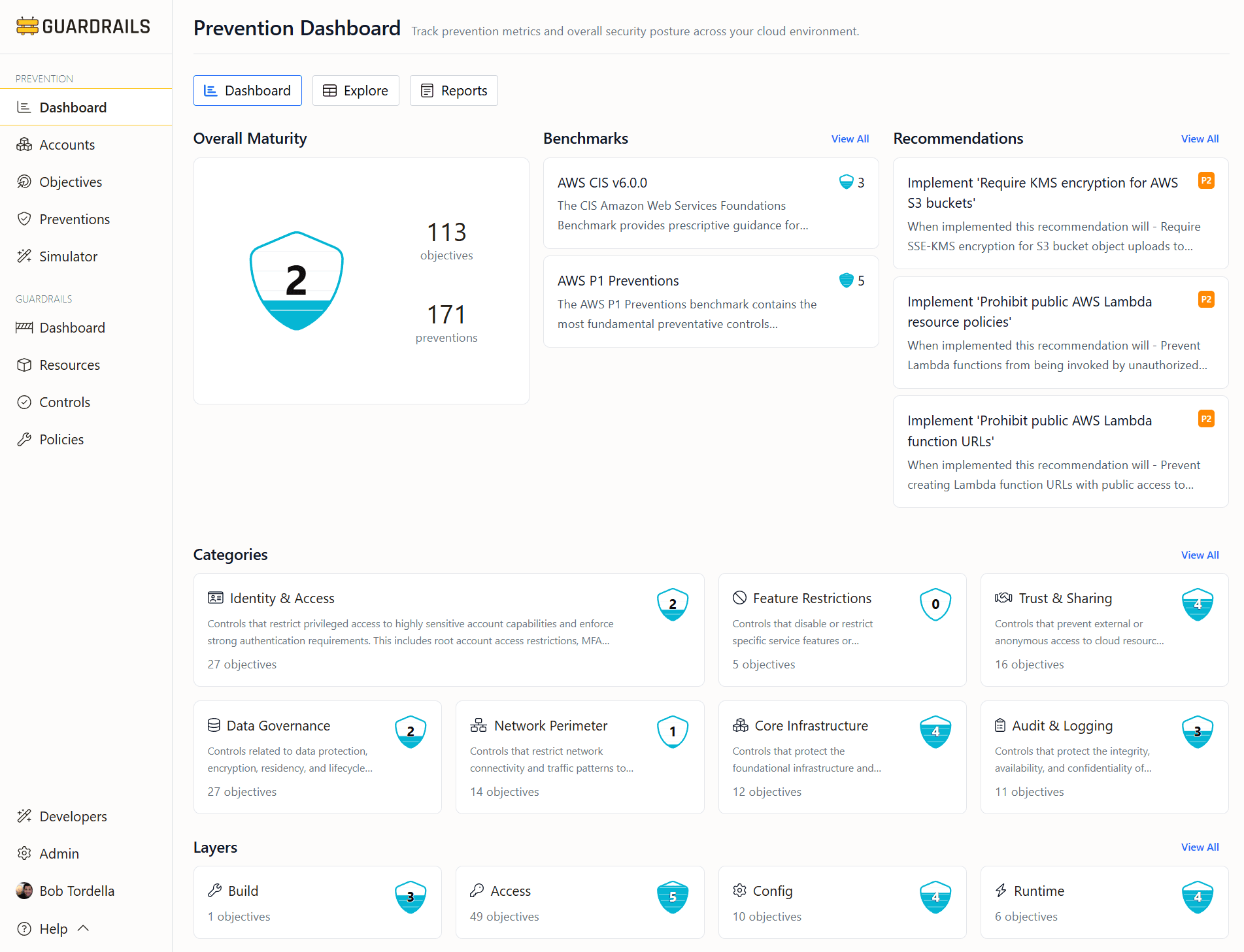
“Audit is next month and you need CIS compliance evidence”
Pipes queries your live cloud configurations and maps them to CIS controls. Snapshot the report and share it with your auditor.
For every failing CIS control, Guardrails shows the recommended SCP or runtime fix. Simulate the impact, then deploy.
Re-run the benchmark. Share the before-and-after snapshots. Schedule weekly compliance reports that run automatically.

“Developers keep removing required tags from resources”
Write a SQL query across AWS, Azure, and GCP to find every resource missing your required tags. See who created them and when.
Guardrails auto-tags new resources on creation and restores tags when someone removes them. The developer never notices.
Track tagging coverage over time. Build a dashboard showing compliance by account, team, or resource type. Share it with stakeholders.
When to Use What
when you need to...- ✓Understand what's in your cloud environment
- ✓Run a compliance benchmark for an audit
- ✓Investigate a security finding
- ✓Build a report for stakeholders
- ✓Query across multiple cloud providers at once
- ✓Ask a quick question about your infrastructure
when you need to...- ✓Stop misconfigurations before they happen
- ✓Auto-fix drift as soon as it occurs
- ✓Enforce tagging, encryption, or access policies
- ✓Block non-compliant API calls at the org level
- ✓Manage security posture across many accounts
- ✓Reduce the volume of alerts your team handles
Most teams start with one and add the other when the need arises. Pipes is often the entry point (free tier, fast to deploy). Guardrails follows when the findings need to stop recurring.